
Wolverhampton · WV1 · West Midlands
Roof Soft Washing in Wolverhampton
Looking for roof soft washing in Wolverhampton? We clean roofs across West Midlands, with a free survey and a fixed written quote before any work starts.
Guide price in Wolverhampton: £380–£660 typical 3-bed semi
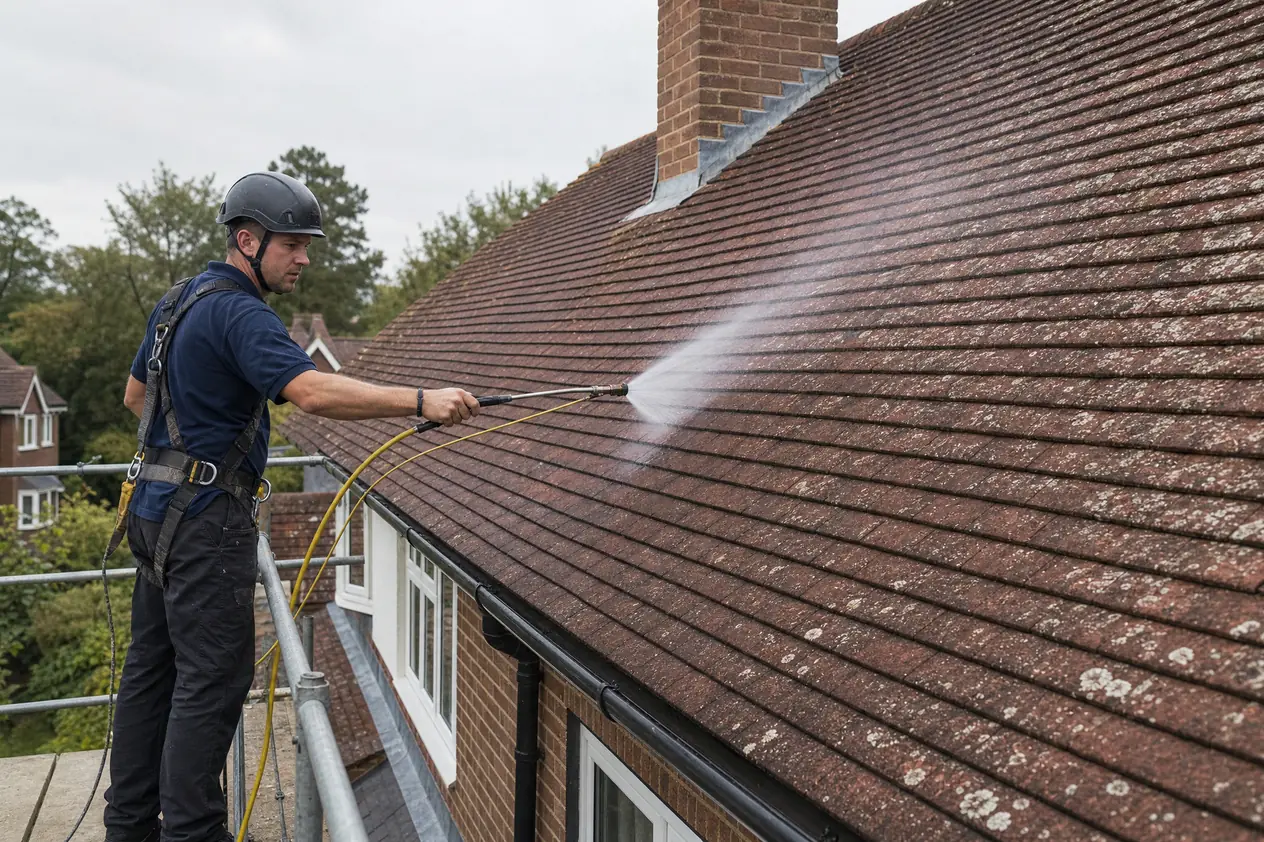
Roof conditions in Wolverhampton
Most of the roofs we clean in the WV1 area are inter-war semis in Marley and Redland concrete tile, Victorian terraces in Welsh slate and Staffordshire blue clay. With steady rainfall and plenty of mature trees across the suburbs, regular treatment keeps them in good order.
Signs your roof needs attention
- Lichen spots that won't brush off
- Moss coming back within a year of a previous clean
- Black algae streaks rather than thick moss
Included in your Wolverhampton quote
- Surface moss removed by hand first
- Advice on how the roof will keep clearing over the following weeks
- Low-pressure application of biocide solution
- Photo report on completion
- Dwell time to let the treatment work
Call 0800 088 4454 or use our quote tool for a guide price in under a minute.
Request a survey in Wolverhampton
We'll arrange a free survey at a time that suits you and confirm a fixed price for your WV1 property.
Nearby
Also in Wolverhampton
Questions from Wolverhampton customers
How much does roof soft washing cost in Wolverhampton?
Guide prices for roof soft washing in Wolverhampton are around £380–£660 for a typical 3-bed semi. The exact price depends on roof size, access and how much growth there is, and we confirm it in writing after a free survey.
Are you insured?
Yes. Our teams carry public liability insurance and work to safe working-at-height practice, with scaffold or roof ladders as the roof requires.
Do I need scaffolding?
Many roofs can be reached safely with roof ladders and edge protection. Taller or steeper roofs may need a scaffold, which we'll include in the quote if needed.
Is soft washing better than pressure washing?
For most UK roofs, yes. It doesn't strip the tile surface or force water under the laps, and it lasts longer because the treatment kills the growth at the root.