
Oxfordshire · South East
Roof Soft Washing in Oxfordshire
Homes and businesses in Oxfordshire book us for roof soft washing because we survey first, quote in writing and clean without blasting the tiles.
Oxfordshire guide price: £450–£780 typical 3-bed semi
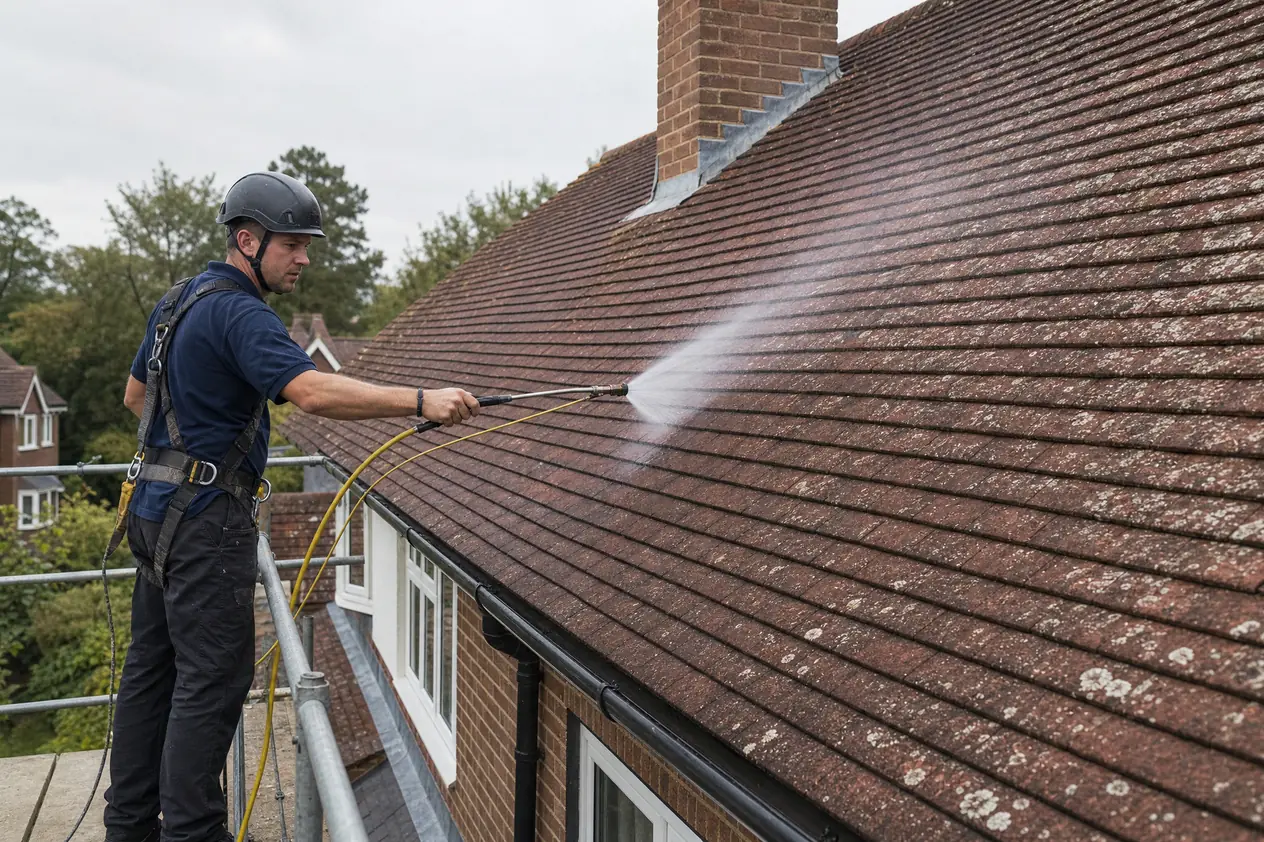
Roofs in Oxfordshire
Roofs around Oxfordshire deal with moderate rainfall, with mature gardens and woodland edges throwing shade and leaf litter onto roofs. Typical properties here include 1930s–1970s semis in concrete interlocking tile, older cottages in Kent peg and plain clay tile, and each needs a slightly different approach.
We remove loose moss, protect plants and paintwork, then apply the soft-wash solution at low pressure. The roof is left to dwell before a gentle rinse, so even old clay or slate is never stressed.
What's included
- Plants and paintwork protected
- Surface moss removed by hand first
- Low-pressure application of biocide solution
- Gutters and downpipes checked and cleared
- Gentle rinse where needed
- Dwell time to let the treatment work
Get a fixed price in Oxfordshire
Book a free survey and we'll confirm a fixed price for your Oxfordshire property in writing.
Questions we're often asked
How much does roof soft washing cost in Oxfordshire?
Guide prices for roof soft washing in Oxfordshire are around £450–£780 for a typical 3-bed semi. The exact price depends on roof size, access and how much growth there is, and we confirm it in writing after a free survey.
How soon can you start in Oxfordshire?
Surveys in South East are usually booked within a week, and most jobs are scheduled within two to three weeks, weather permitting.
Do you cover Oxfordshire?
Yes. We work throughout Oxfordshire and the rest of South East, including OX1, OX16, OX14 postcodes. Surveys are free and there's no obligation.
Can you work if it rains?
Light drizzle is fine for moss removal, but biocides need a few dry hours, so we rearrange in heavy rain or frost.
Is soft washing better than pressure washing?
For most UK roofs, yes. It doesn't strip the tile surface or force water under the laps, and it lasts longer because the treatment kills the growth at the root.