
Lancashire · North West
Roof Moss Removal in Lancashire
Looking for roof moss removal in Lancashire? We clean roofs across Lancashire, with a free survey and a fixed written quote before any work starts.
Lancashire guide price: £320–£600 typical 3-bed semi
Roofs in Lancashire
Roofs around Lancashire deal with some of England's wettest towns, so moss builds up quickly on north and east faces. Typical properties here include stone and brick terraces with slate roofs, post-war semis in concrete tile, and each needs a slightly different approach.
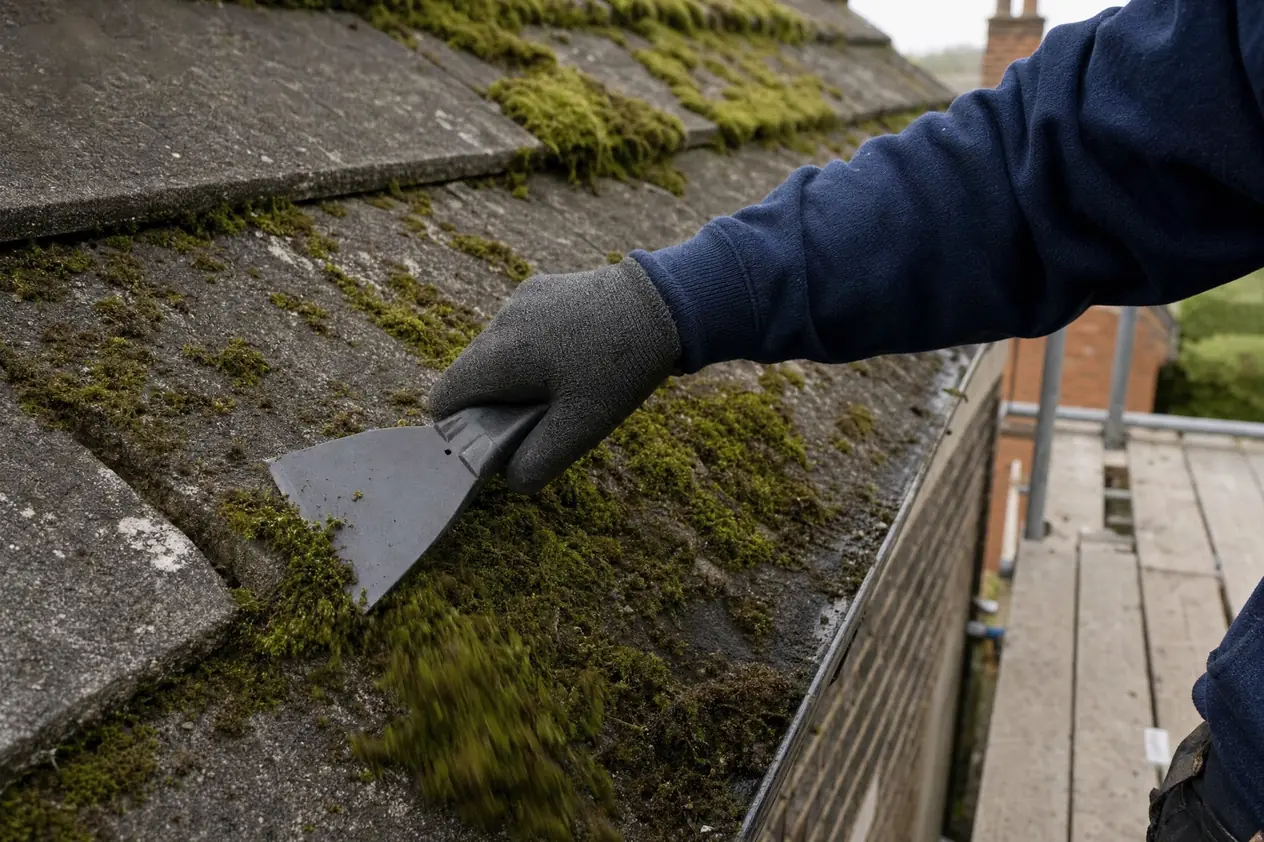
Moss is lifted with plastic scrapers and soft brushes, working with the tile laps rather than against them. We bag it as we go, clear the gutters it drops into and spray a biocide to stop it coming straight back.
What's included
- Moss bagged and removed from site
- Biocide spray to stop quick regrowth
- Before-and-after photos
- Ground protection around the house
- Check of ridge mortar and verge pointing
- Gutters and outlets cleared afterwards
Get a fixed price in Lancashire
Book a free survey and we'll confirm a fixed price for your Lancashire property in writing.
Questions we're often asked
Are you insured?
Yes. Our teams carry public liability insurance and work to safe working-at-height practice, with scaffold or roof ladders as the roof requires.
What happens to the moss and waste?
We sheet the ground, bag the moss and debris, and take it away. Paths and drives are rinsed off before we leave.
How much does roof moss removal cost in Lancashire?
Guide prices for roof moss removal in Lancashire are around £320–£600 for a typical 3-bed semi. The exact price depends on roof size, access and how much growth there is, and we confirm it in writing after a free survey.
How soon can you start in Lancashire?
Surveys in North West are usually booked within a week, and most jobs are scheduled within two to three weeks, weather permitting.
Does moss really damage a roof?
Moss holds water against tiles, and in frost that water expands. Over time it can lift tiles, block gutters and push water back under the laps, so it's worth removing before it gets thick.