
Greater Manchester · North West
Clay Tile Roof Cleaning in Greater Manchester
Homes and businesses in Greater Manchester book us for clay tile roof cleaning because we survey first, quote in writing and clean without blasting the tiles.
Greater Manchester guide price: £410–£740 typical 3-bed semi
Roofs in Greater Manchester
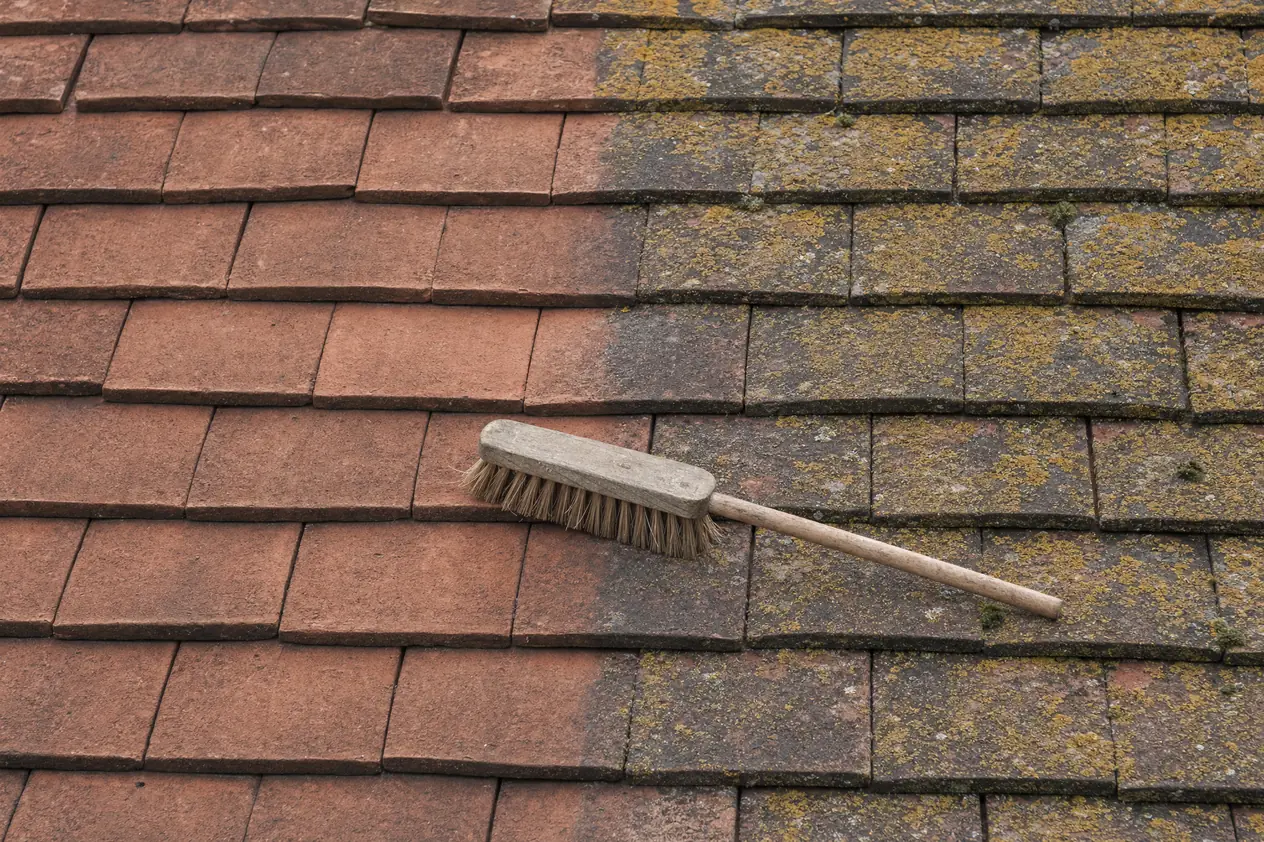
Greater Manchester gets some of England's wettest towns, so moss builds up quickly on north and east faces. Around Greater Manchester, that means moss builds fastest on shaded pitches, especially on stone and brick terraces with slate roofs, post-war semis in concrete tile.
We avoid aggressive cleaning on clay. Moss comes off by hand, lichen is treated with a low-pressure biocide, and we leave the patina that older clay roofs are valued for.
What's included
- Survey of tiles, nibs and fixings
- Photo report of any broken tiles
- Moss removed by hand
- Ridge and hip tiles cleaned
- Low-pressure biocide
- Gutters cleared
Towns we cover in Greater Manchester
Get a fixed price in Greater Manchester
Tell us about your roof and we'll come back with a survey date that suits you.
Questions we're often asked
Can you work if it rains?
Light drizzle is fine for moss removal, but biocides need a few dry hours, so we rearrange in heavy rain or frost.
Do I need scaffolding?
Many roofs can be reached safely with roof ladders and edge protection. Taller or steeper roofs may need a scaffold, which we'll include in the quote if needed.
How much does clay tile roof cleaning cost in Greater Manchester?
Guide prices for clay tile roof cleaning in Greater Manchester are around £410–£740 for a typical 3-bed semi. The exact price depends on roof size, access and how much growth there is, and we confirm it in writing after a free survey.
Are you insured?
Yes. Our teams carry public liability insurance and work to safe working-at-height practice, with scaffold or roof ladders as the roof requires.
Will cleaning change the colour of my clay tiles?
We aim not to. Soft cleaning removes growth but keeps the weathered colour. Pressure washing can strip it, which is one reason we don't use it on clay.